



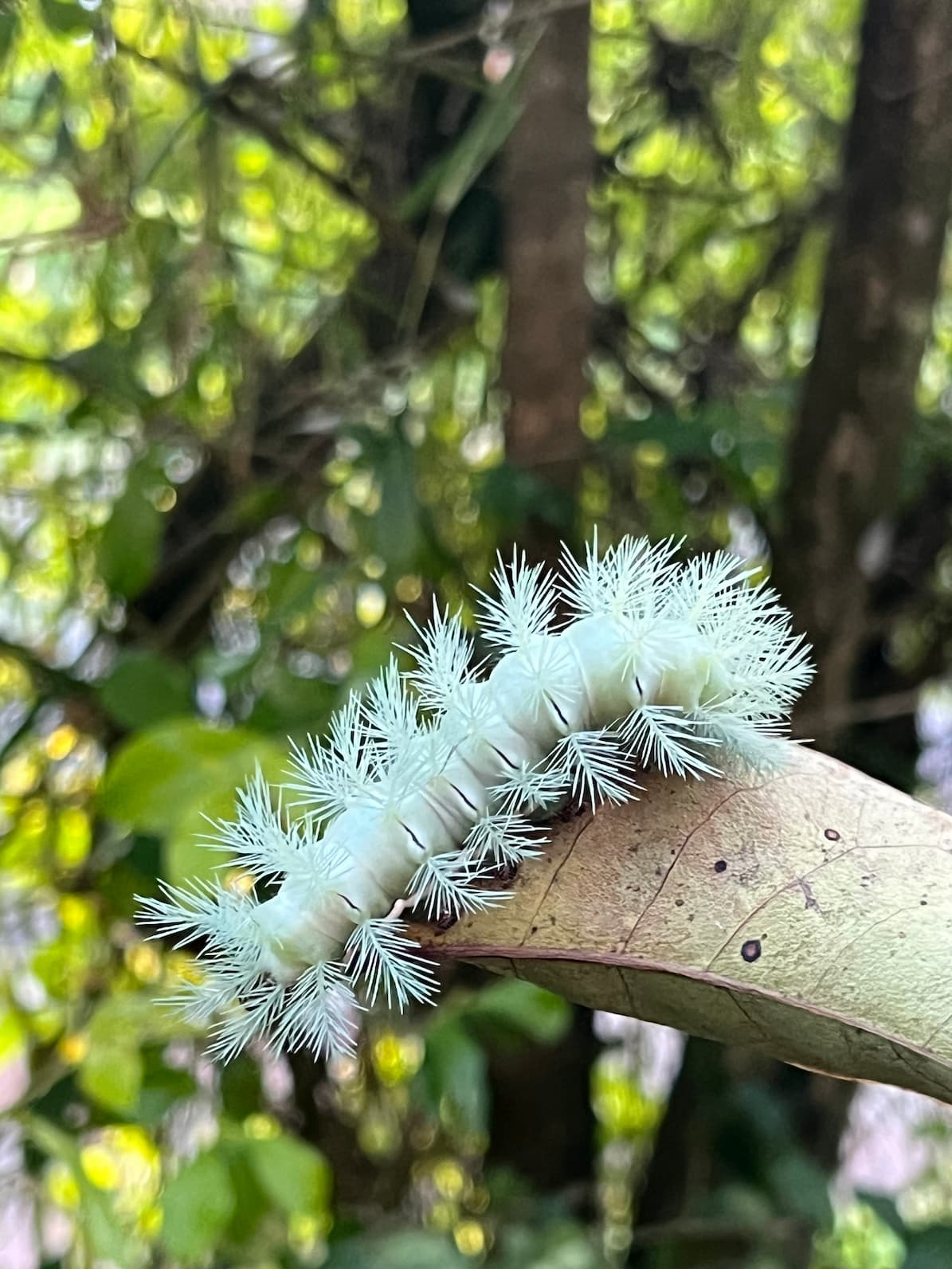
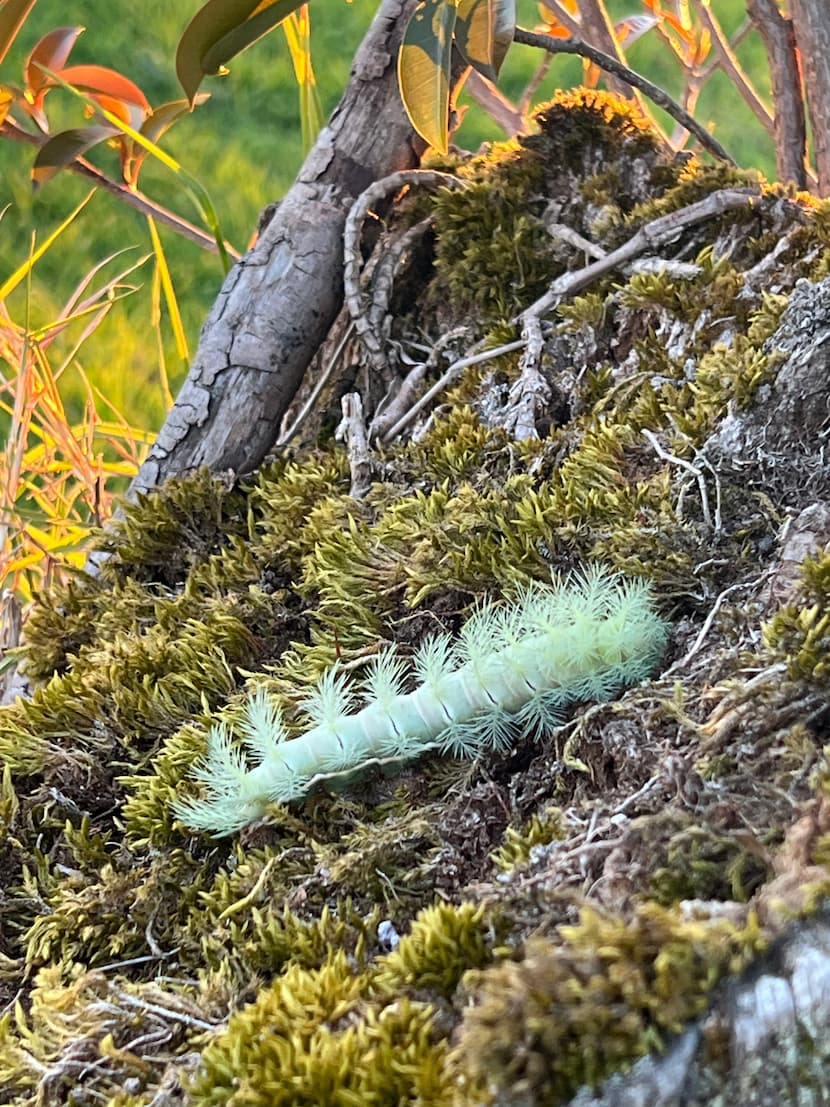
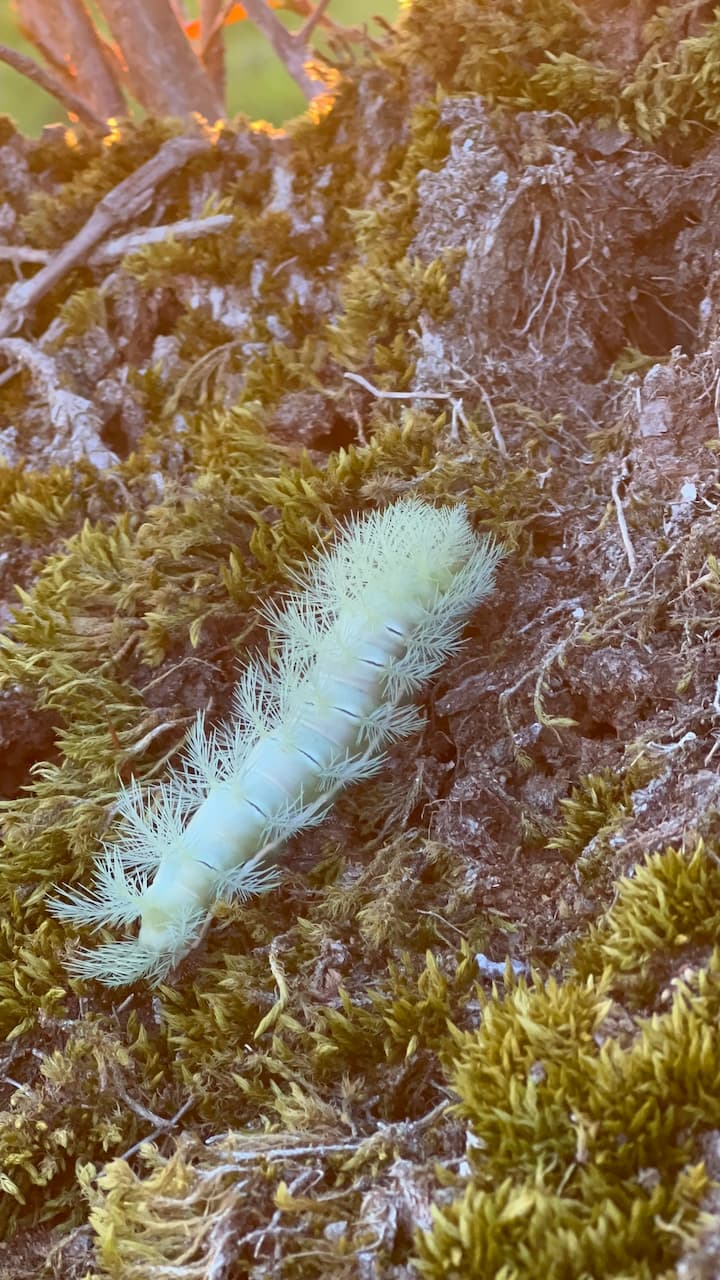
The caterpillar of Automeris belti is a striking and highly defensive larval stage of a Central American moth, covered in branching venomous spines capable of delivering a painful sting. Despite its bright green coloration, it is not harmless — this species uses both warning signals and chemical defense to deter predators.
RangeAutomeris belti is found throughout Central America, including Costa Rica, Nicaragua, Honduras, and Panama. In Costa Rica, it is commonly found in: rainforests, forest edges, secondary growth areas, rural and garden environments.
BehaviorHighly defensive and visually conspicuous, the caterpillar relies on venomous spines for protection rather than camouflage alone. When threatened, it may remain still or slightly arch its body, exposing its spines. Younger larvae tend to cluster together, increasing their defensive effect.
Feeds on a wide variety of plant leaves.
ReproductionEggs are laid in clusters on host plants. Caterpillars hatch and pass through multiple growth stages (instars). Each stage increases spine development and toxicity. Eventually pupates in leaf litter or soil before emerging as a moth
🕰 Lifespan
VenomThis caterpillar venomous spines connected to small toxin glands. When touched, these spines break off into the skin and release venom, causing an immediate reaction.
💥 Pain level: moderate to strong (3/5 similar to or worse than a bee sting)
Specification 🧬Latin name: Automeris belti (larval stage)
Family: Saturniidae
Order: Lepidoptera
Size: ~4–6 cm
Weight: <2 g
Lifespan: ~3–5 weeks













🎁 Fun Fact:
Covered in venomous spines that act like tiny hypodermic needles. Young caterpillars live in groups for stronger defense.
Belongs to the “saturniid” family, named after the Roman god Saturn due to ring-like wing patterns in adults
The moth known for its dramatic eyespots on the wings
👉 Full details: Automeris belti (Moth)
⚠️ Advice:
Look on leaves in tropical gardens and forest edges
Search during daytime — easier to spot than adults
Check clusters of small caterpillars on single plants
⚠️ Safety Tips
Contact may lead to redness, swelling, or irritation
Use tape to remove spines if contact occurs (do not rub)
Wash the area with soap and water
Keep children and pets away