
From poison frogs to soaring toucans, meet the rainforest’s coolest creatures. Dive in, get curious, and let nature wow you.
Living encyclopedia: rare and common species of Costa Rica, personally
spotted and marked on the map. Field archive of observations including
photos, video routes and locations. Personal collection.
This Toucan is a colorful inhabitant of the tropical forests of Central and South America. Its huge multi-colored beak makes the bird a true symbol of the jungle.
It feeds mainly on fruits, but sometimes catches insects and small animals. The beak helps to get fruits and serves for communication - toucans communicate with loud sounds.
These birds live in groups and are always active. To see a Rainbow Toucan means to feel the spirit of the tropics.
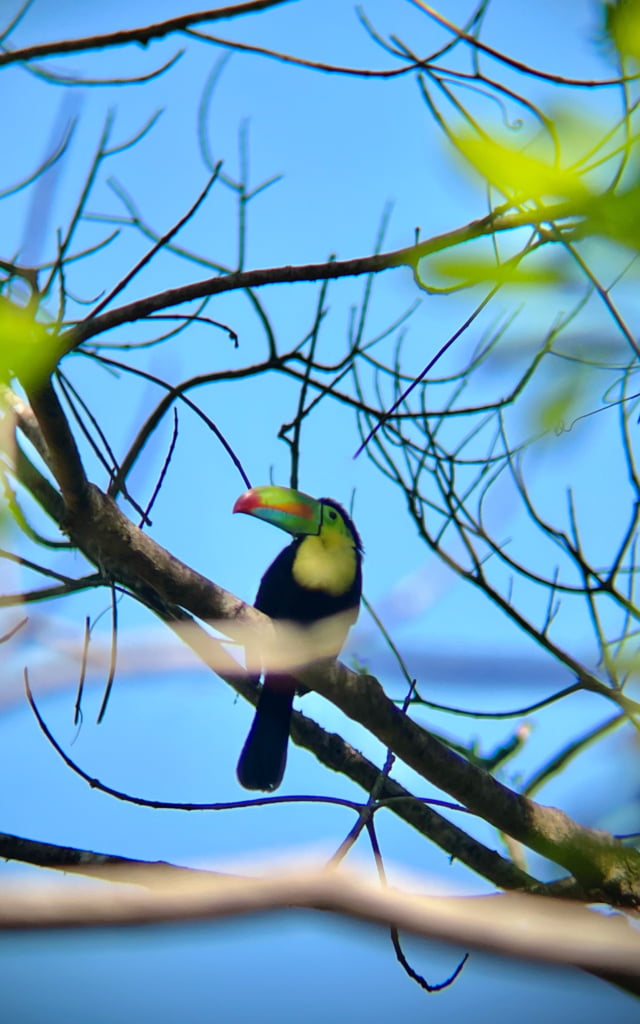


🎁 Fun fact: The Rainbow-billed Toucan, known as the “bill bird” locally, is the national bird of Belize.
![[digital project] image of industry insights article (mobile interface display, outdoors)](https://cdn.prod.website-files.com/687c4c4d12c709bfff808b11/689639ee820978989129ec0c_2%20(1).jpg)
Explore the coolest creatures of Costa Rica. From rainforests to rivers, get to know the animals that make this place wild.
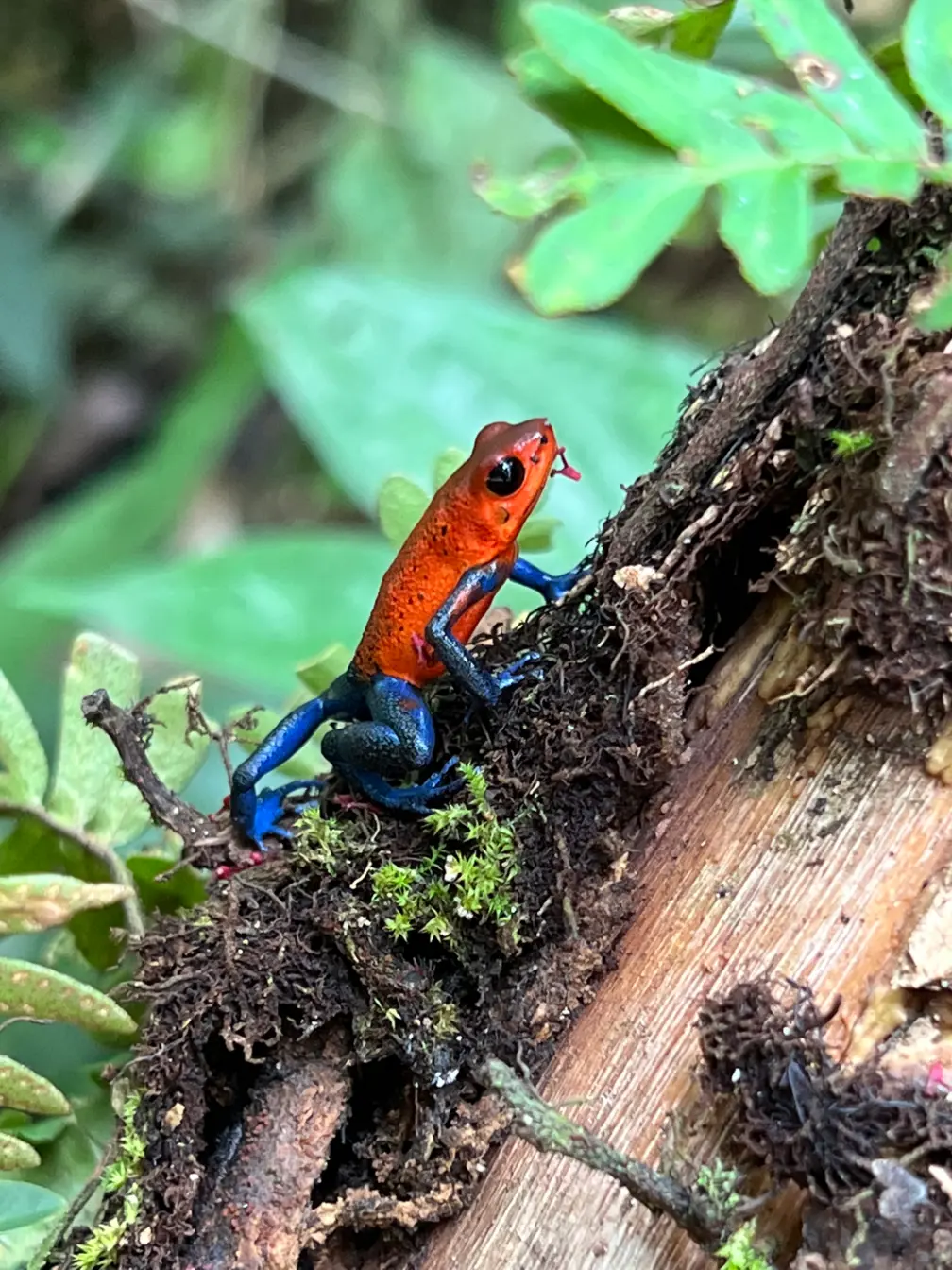
Bold colors make this iconic poison frog easy to spot by day, as it moves through the rainforest floor.
With its oversized, multicolored bill this iconic toucan is a familiar sight in the rainforests of Costa Rica.

Funny, curious, and seriously adorable.
Meet this rainforest’s resident.

Nocturnal and tree-dwelling, this frog rests motionless by day and comes alive at night, flashing its red eyes among rainforest leaves.
Here is a distribution of animals on a rarity scale (based on the typicality of encounters in the wild in Costa Rica, visual uniqueness and observer impressions)
Species that can often be seen in tourist areas, national parks and, with a little luck, even by the road.

Occurs regularly, but not every day. Requires a bit of luck or visiting the right place/time of day.

They are much less common. You need to look for them in certain conditions, and tourists rarely come across them.
Great luck, limited habitat, nocturnal or secretive.

Very hard to find. Their appearance is an event. Often considered a "pearl" of observers.

Local legends, almost no one has seen it personally, unless with a trap camera or a lot of luck. So rare that it seems almost fictional

Diet TypesHabitat TypesOmnivorous
Animals eat everything (monkeys, coatis)

Carnivorous
Animals eat only meat (owls, pumas)

Scavenger
Animals feed on carrion (vultures)

Piscivorous
Animals eat only fish (heron, otters)
Tropical Forest
General, broad concept:
- All types of forests that are located in the tropical climate zone
- Includes humid rain forests, dry tropical forests, mangrove forests, etc.

Rainforest
Narrower definition:
- This is a tropical forest with very high rainfall (usually >2000 mm per year).
- Always green, with a dense canopy and multi-layered vegetation.
-In Costa Rica, for example, it is Corcovado
Insectivorous
Animals eat insects (frogs, anteater)

Herbivorous
Animals with diets ranging from grass and leaves to fruits, seeds, and nectar.

Frugivorous
Animals feed on fruits (agouti)

Folivorous
Animals feed on leaves (sloth)

Cloud Forest
Narrower definition:
- Forest in the mountains at an altitude of 1000–3000 m, with permanent cloud cover and humid fog.
- Cool climate, trees densely covered with mosses, orchids and epiphytes.
- In Costa Rica: Monteverde

Wetlands
Narrower definition:
- Wetlands: mangrove forests, lagoons, seasonally flooded areas.
- Rich avifauna and habitat for amphibians and reptiles.
- In Costa Rica: Palo Verde, Caño Negro.

Granivorous
Animals feed on gran and seed (parrots)

Nectarivorous
Animals feed on nectar (bats, hummingbirds)

Xylophagous
Animals feed on wood (termites)

Sanguinivorous
Animals feed on sucking blood (vampire bats)
Mangroves
A narrower concept:
- Coastal ecosystems where trees and shrubs grow directly in brackish or sea water.
- In Costa Rica, mangrove forests are found along the coasts of the Pacific Ocean and the Caribbean Sea (for example, Sierpe, Damas, Cahuita).

Woodlands
A narrower concept:
An ecosystem where trees grow sparsely, leaving a lot of open space between the crowns.
Unlike dense forests, more sunlight reaches the ground here, so shrubs and herbaceous plants are well developed.
Transitional zones between forest and savannah are common. Both forest and steppe species of animals live here.

Detritivorous
The main source of food is organic matter (plant particles, dead animals, microalgae).

Mycophagous
Animals feed on mushrooms

Dry forest
A narrower concept:
- A tropical forest with a pronounced dry season (trees may shed their leaves).
- Animals adapted to the lack of water, there are both forest and savannah species.
- In Costa Rica: Santa Rosa, Guanacaste.

Plankton
Plankton are drifting aquatic organisms

Durophagous
Animals feed on solid food (stingrays, fish, sea otters).
Ocean
Deep salt waters rich in life.
- Home to dolphins, whales, sharks, and seabirds.
- In Costa Rica: Pacific Ocean off the Osa Peninsula, Caribbean coast.

River
- Freshwater currents with dense vegetation along the banks.
- Habitat for otters, caimans, turtles and river birds.
- In Costa Rica: Rio Celeste, Rio Pacuare.
Discover the secrets of the jungle and its inhabitants.
You bet! Sloths take life easy—napping, munching, and hanging out high above the ground. Slow and steady keeps them safe.
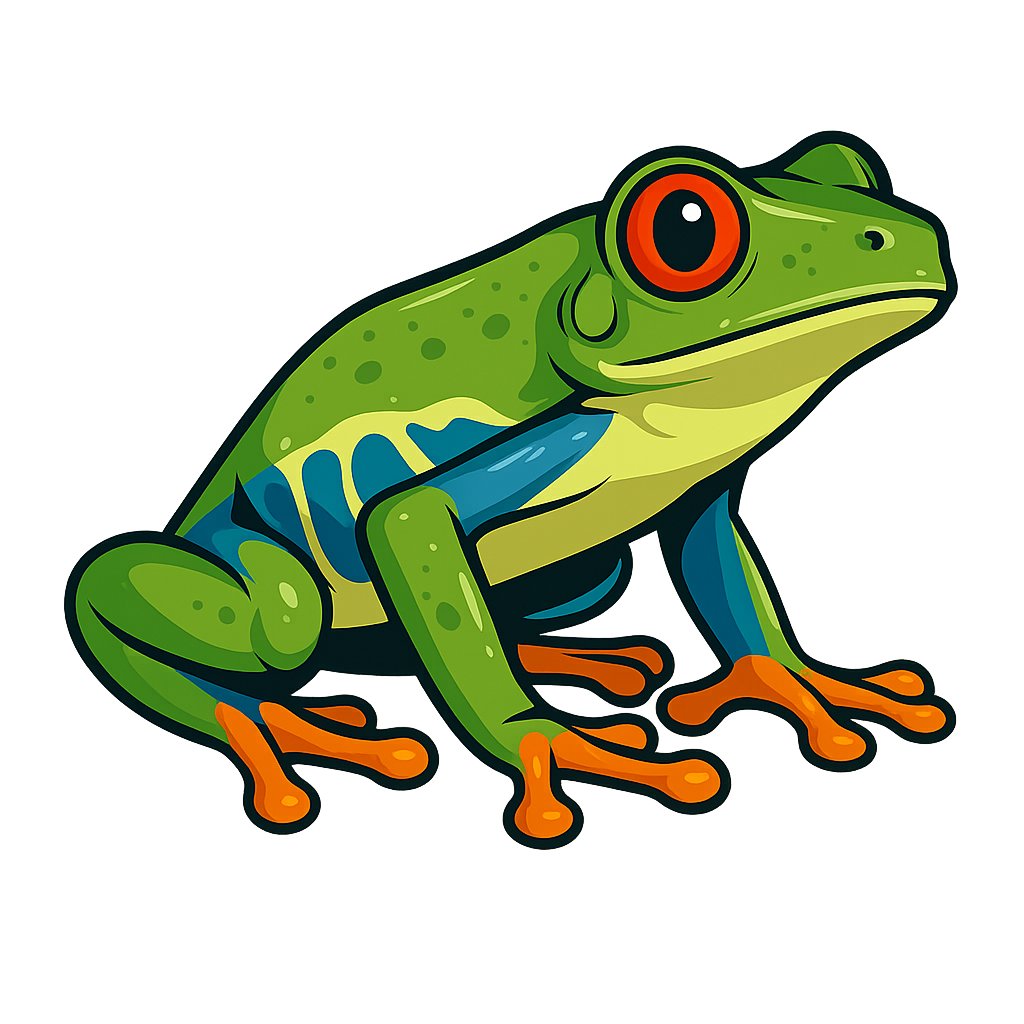
Red-eyed tree frogs are the showstoppers! Their neon green and bold red eyes light up the rainforest.
They slap the water surface fast enough to stay above it—earning them the nickname “Jesus Christ lizard.”
Howler monkeys! Their thunderous calls echo at sunrise and sunset—nature’s own jungle alarm.
![[background image] of an animal shelter](https://cdn.prod.website-files.com/687c4c4d12c709bfff808b11/697bca37657f39d756d15a9d_starbucks-1.jpg)
![[background image] image of a welcoming reception area (for a automotive service).](https://cdn.prod.website-files.com/687c4c4d12c709bfff808b11/68962f4f61e4da7fd58a36f7_IMG_1473.jpg)

.jpg)